Sports and Wellness
Best Golf Swing Tips for Beginners
Grip Stance Alignment Posture Backswing Downswing Follow-through Clubface Weight transfer Hip rotation Body rotation Wrist hinge Club extension Pace of play Etiquette Divot Bunker Fore Ball striking Club selection Swing technique Mental strength Foot positioning Target line Counterbalance Weight distribution Accuracy Control Speed Precision Consistent swing Fore! Club grip Shot execution Natural feel Athletic position Pressure distribution Swing path Impact zone Smooth movement Tee Chipping Putting Course care Course respect Practice swings Consistency

Starting golf can feel overwhelming with lots of advice. Beginners often think they need to master complex techniques or buy expensive gear immediately, which can be a lot. But with the right guidance and patience, anyone can enjoy this sport. Moving from hitting your first ball to feeling confident with your swing is rewarding. The key is to focus on simple, actionable steps to build a solid foundation. This guide covers the essentials to help you start without feeling overwhelmed.
Grip
The way you hold the golf club, known as your grip, is the only physical connection you have with the club. It's therefore quite important to get this right from the start. There are three main ways to hold the club: the ten-finger (or baseball) grip, the interlocking grip, and the overlapping grip. For beginners, the ten-finger grip is often recommended as it allows all fingers to be involved, promoting a more natural feel. As you progress, you might find the interlocking or overlapping grips more comfortable or beneficial for control.
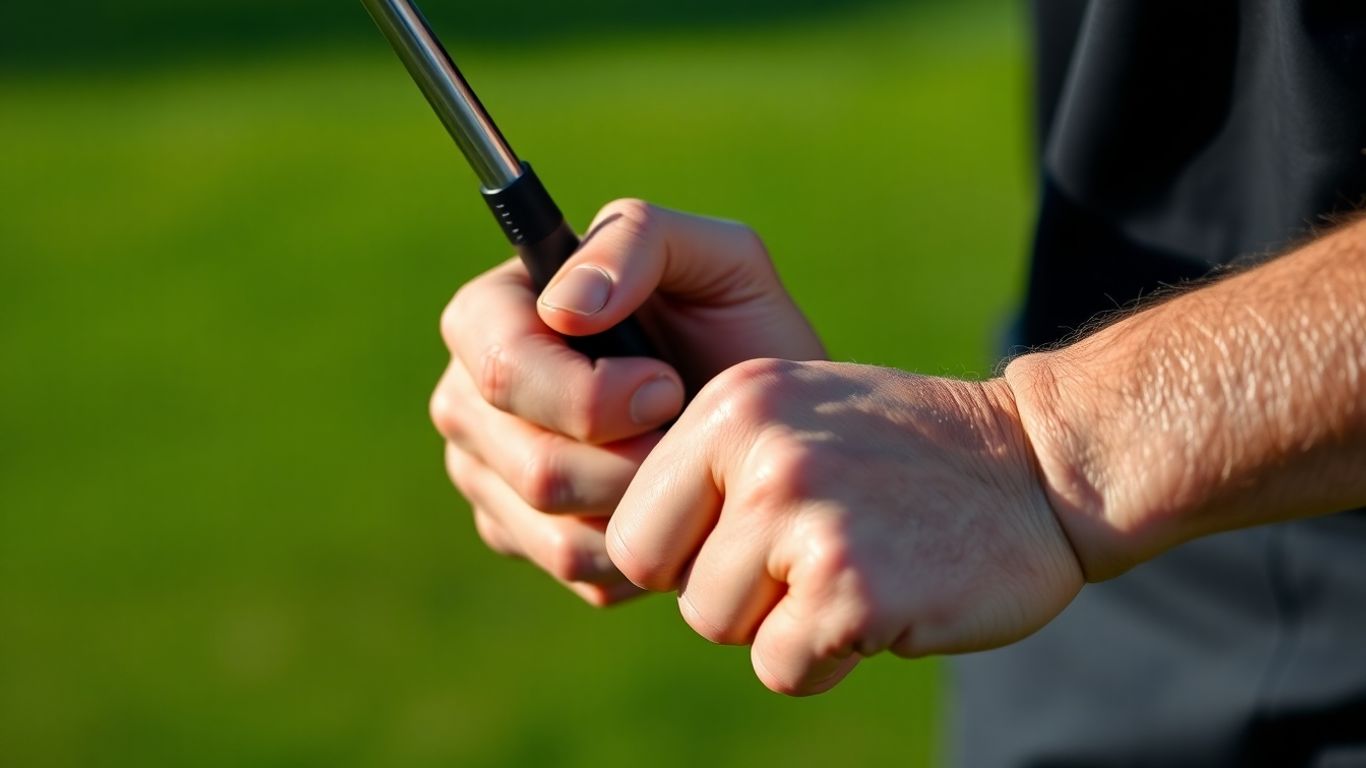
When setting your grip, aim for a pressure that feels firm but not tense. Imagine holding a tube of toothpaste without squeezing it out. The pressure should be distributed primarily across the middle three fingers of your top hand. For right-handed players, this means your left hand is on top, and for left-handed players, your right hand is on top. The 'V' shape formed by your thumb and index finger on your top hand should point roughly towards your right shoulder (for right-handers), and the 'V' on your bottom hand should point towards your trail shoulder. It’s also worth noting that your top hand’s thumb should rest on the side of the grip, away from the target, and your bottom hand’s thumb should face the target.
Ten-Finger Grip: All ten fingers are on the club, similar to holding a baseball bat. This is a good starting point for many beginners.
Interlocking Grip: The pinky finger of your bottom hand interlocks with the index finger of your top hand.
Overlapping Grip: The pinky finger of your bottom hand rests in the groove between the index and middle fingers of your top hand.
Stance
Getting your stance right is a really important step before you even think about swinging the club. It sets the foundation for everything else. For a solid base, aim to have your feet roughly shoulder-width apart. Imagine a line running from your target to the ball; your feet should be parallel to this line. You want to feel athletic and stable, like you could hold that position if someone gently pushed you.
Slightly bend your knees – not too much, just enough to feel balanced. Your weight should feel centred, perhaps leaning a little towards the balls of your feet. From here, hinge forward at your hips, keeping your back relatively straight, and let your arms hang down naturally. The club's grip end should roughly align with the tips of your toes. This helps create a good connection between your body and the club.

Where you position the ball in your stance changes depending on the club you're using. For longer clubs like the driver, the ball moves further forward, generally in line with the inside of your front foot. With shorter clubs, like wedges, the ball will be more in the middle of your stance.
Here's a quick guide:
Driver: Ball positioned off the inside of your front foot.
Mid-Irons (e.g., 7-iron): Ball positioned in the centre of your stance.
Short Irons/Wedges: Ball positioned slightly forward of centre.
Alignment
Getting your alignment right is a bit like setting the sat-nav before a long drive; if you point it the wrong way from the start, you're not going to end up where you intended. In golf, this means ensuring your body – specifically your feet, hips, and shoulders – is lined up parallel to your intended target line. This creates a consistent swing path, making it much more likely the ball will travel where you're aiming.
Think of it this way:
Feet: Position your feet so they are square to the target line, meaning the line running between your feet is parallel to the line you want the ball to travel along.
Hips and Shoulders: Your hips and shoulders should mirror your feet's alignment, also pointing parallel to the target line. It’s easy to accidentally aim your body left or right, so double-check this.
Clubface: While your body is aligned to the target, the clubface itself should be aimed directly at the target at address.
To help you get this right, especially when you're starting out, using an alignment stick or even a spare club laid on the ground can be incredibly useful. Place one stick along your toe line and another parallel to it, pointing towards your target. This gives you a clear visual reference. Consistent alignment is a cornerstone of hitting the ball straight.
Posture
Getting your posture right at address is really important for a good golf swing. It's not just about looking the part; it sets you up to move efficiently through the ball. Think about hinging at your hips, not bending your back. Your upper body should lean forward a bit, and your arms should hang down naturally from your shoulders. This creates a stable base and allows your arms to swing freely.
A balanced posture allows for a more consistent and powerful golf swing.
Here’s a simple way to check your posture:
- Stand with your feet about shoulder-width apart.
- Let your arms hang loosely in front of you.
- Now, bend forward from your hips, keeping your back relatively straight, until your hands are roughly below your shoulders.
- Allow your knees to soften just a little. You shouldn't feel stiff or locked.
It's worth practising this in front of a mirror at home. You want to feel like you're in a good athletic position, ready to swing. This setup is the foundation for everything else that follows in your swing.
Backswing
The backswing is where you build the power for your shot. It starts with the takeaway, which is the initial movement of the club away from the ball. Think of this as a single unit, with your chest, arms, and the club moving together. Avoid just flicking your wrists; instead, turn your shoulders and let your arms follow. The club should move back low and slow, staying connected to your body's rotation. Aim for the club to be parallel to your target line when it reaches waist height.
As you continue the backswing, focus on turning your shoulders. Your lead arm should remain relatively straight, but not stiff. You want it firm. At the top of the swing, you should feel a good turn in your shoulders and a slight shift of weight onto your back foot. Don't worry too much about the club being perfectly parallel to the ground or other technicalities at this stage. The goal is a controlled turn and a natural stop. Your back should face the target, and your wrists should be hinged.

Here are a few key points to remember during your backswing:
Keep your left arm (for right-handed golfers) reasonably straight throughout the motion.
Turn your hips away from the ball, feeling the pressure shift to the inside of your back leg.
Maintain your spine angle from address; avoid standing up or bending too much.
At the top of the swing, your wrists should be hinged, and the club shaft should ideally point towards the target, or be close to parallel to the ground. The key is to have a position that allows for a smooth transition into the downswing. Don't rush this part; a deliberate backswing sets up a more effective downswing.
Downswing
The downswing is where the real action happens, transitioning from the stored energy of the backswing to striking the ball. It’s a common mistake for beginners to try and force power with their arms here, but the secret is to let your body lead the way.
Start the downswing by shifting your weight towards your front foot, initiating the movement with your hips. Think of it as unwinding your body. Your arms and the club should then follow naturally. Keep your wrists hinged for as long as possible, allowing the clubhead to approach the ball squarely. This sequence should feel noticeably quicker than your backswing.
Here are a few points to focus on during the downswing:
Initiate with the lower body: Begin the downswing by rotating your hips towards the target.
Maintain wrist hinge: Keep your wrists hinged until just before impact to generate clubhead speed.
Keep your head relatively still: Avoid lifting your head too early; let your body rotation guide the swing.
Tuck your trail elbow: For right-handed golfers, keeping the right elbow tucked close to your body helps prevent the club from coming 'over the top'.
Follow-Through
The follow-through is often overlooked by beginners, yet it’s a vital part of a good golf swing. It’s not just about what happens after you’ve hit the ball; it’s a reflection of the entire motion that preceded it. A proper follow-through helps ensure you’ve transferred your weight correctly and maintained balance throughout the swing. Think of it as the natural conclusion to a well-executed sequence.
After making contact, allow the club to continue its arc around your body. Your arms should extend naturally, and your body should rotate towards the target. Resist the urge to stop the swing abruptly or to look up too soon. Keep your eyes focused on the ball for a moment longer, allowing your body to complete its rotation. Your weight should have shifted predominantly onto your front foot, and you should finish in a balanced pose, facing the target, with the club resting comfortably over your lead shoulder.
Here are some key elements to focus on during your follow-through:
Weight Transfer: Ensure most of your weight is on your front foot.
Body Rotation: Your hips and chest should rotate to face the target.
Club Extension: Allow your arms to extend fully and the club to swing through.
Balance: Finish in a stable, balanced position without falling over.
Remember, the follow-through is a consequence of the preceding actions. If your grip, stance, and backswing were correct, the follow-through will often happen more naturally. Focus on completing the motion with good balance and control, and you’ll find your ball striking improves as a result.
Golf Etiquette
Golf etiquette is all about showing respect for the course and your fellow players. It’s not just about the rules, but about making sure everyone has a good time. As a beginner, understanding these unwritten rules will help you feel more at ease on the course and blend in with more experienced golfers.
Always be mindful of the pace of play. This means keeping up with the group in front of you. If your group is moving slower, it’s polite to let faster groups play through. This keeps the game flowing smoothly for everyone.
Here are a few key points to remember:
Be ready to play when it’s your turn. Don’t wait until it’s your shot to start thinking about your club selection or stance.
Keep quiet and still when others are swinging. A sudden noise or movement can easily distract a player and affect their shot.
Repair any damage you cause to the course. This includes replacing divots (pieces of turf) and raking bunkers after you’ve played from them. It’s a simple way to look after the course for the next players.
Be aware of safety. Before you swing, always check that no one is in the line of your shot. If your ball is heading towards someone, shout “Fore!” to warn them.
Putting It All Together
So, there you have it. Learning to swing a golf club might seem a bit much at first, with all the talk about grip, stance, and all the rest. But honestly, it’s not as complicated as it looks. Focus on getting those basics right – how you hold the club, where you stand, and how you aim. Don't worry about whacking the ball as hard as you can; that usually just makes things worse. Instead, try to make smooth, controlled movements.
Remember that practice, especially doing slow swings to get the feel of it, is your best friend. Everyone starts somewhere, and even the pros are always working on their game. Be patient with yourself, enjoy the process, and you’ll start to see improvements. The main thing is to build good habits from the start, and you'll be well on your way to enjoying this fantastic game.
